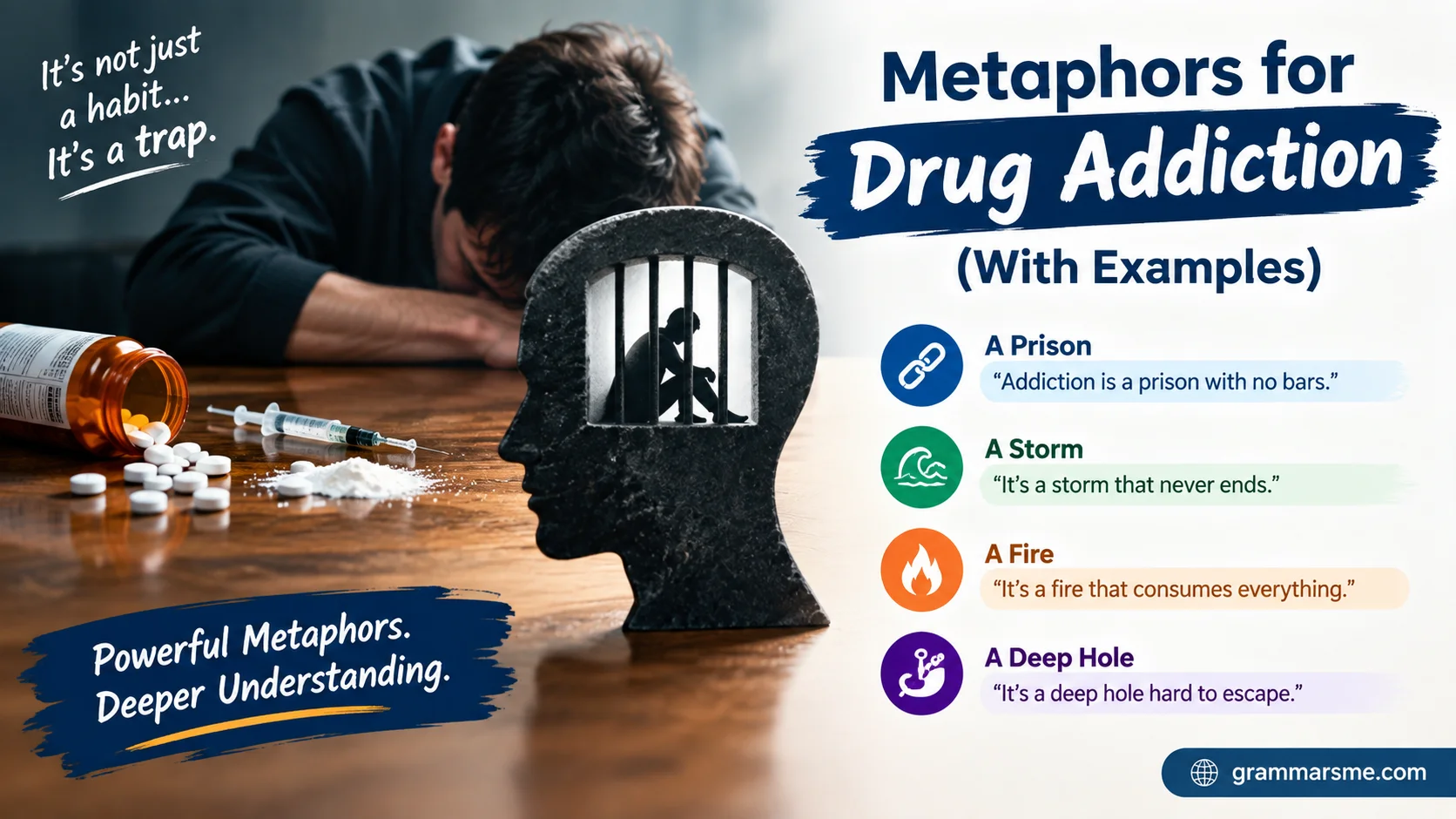

Explore 20 Metaphors for Drug Addiction (With Examples) to explain difficult feelings, hidden struggles, and recovery in simple, clear language.
Finding the right words to talk about drug addiction is difficult because the subject involves pain, shame, fear, recovery, and difficult emotions. Metaphors help with explaining deep ideas through vivid images and comparisons, making complex experiences easier to understand by connecting familiar things people know with the hidden realities of this condition. In plain words, we can explore 39 unique metaphors, each offering clear meaning, an example sentence.
A thoughtful metaphor can show the power, emotional weight, and struggles of addiction without defining a person by it. Empathy and clarity strengthen the message, while images such as storm, chain, shadow, fire, and maze can shape how readers remember the human experience. Used carefully, these comparisons help families, writers, teachers, counselors, and people in recovery communicate complex feelings about the struggle of addiction in a compassionate, less judgmental way. The aim is not to define the person experiencing it, but to describe the experience while encouraging understanding and hope.
1. Addiction Is a Storm
Meaning: Addiction can be compared to a storm because it can bring confusion, emotional turbulence, and destructive consequences.
Detailed explanation:
A storm can begin quietly and then become increasingly difficult to control. Similarly, drug addiction may start as something a person believes they can manage before cravings and consequences become overwhelming. The metaphor emphasizes the chaotic nature of addiction without suggesting that the person is inherently broken. Like a storm, addiction can also pass through periods of intensity and calm. Recovery can represent finding shelter, seeking support, and gradually moving toward clearer skies.
Example:
“His addiction felt like a storm that kept growing stronger until he finally reached out for help.”
3 other ways to say it:
- Addiction is an emotional hurricane.
- Addiction is a storm inside the mind.
- Addiction is a tempest that disrupts life.
2. Addiction Is a Chain
Meaning: Addiction can be described as a chain because it may make someone feel trapped in a repetitive cycle.
Detailed explanation:
A chain connects one link to another, making it difficult to separate one part from the next. Addiction can work similarly: craving may lead to use, use may lead to consequences, and consequences may lead to renewed distress or craving. The metaphor highlights the feeling of being trapped while leaving room for the possibility of breaking the cycle through support and treatment.
Example:
“Every relapse felt like another link in the chain, but recovery helped him begin breaking it.”
3 other ways to say it:
- Addiction is a set of invisible chains.
- Addiction is a chain around a person’s choices.
- Addiction is a cycle that feels difficult to break.
3. Addiction Is a Shadow
Meaning: Addiction can be compared to a shadow because it may follow someone through different parts of life.
Detailed explanation:
A shadow stays close even when a person moves from one place to another. In a similar way, addiction can affect relationships, work, emotions, finances, and personal goals. The metaphor also captures the hidden side of addiction. Someone may appear fine on the outside while privately struggling with cravings or fear. Importantly, a shadow is not the person themselves. This makes the metaphor useful when emphasizing that addiction is something a person experiences, not their entire identity.
Example:
“Even after rebuilding his life, the shadow of addiction reminded him of the years he had struggled.”
3 other ways to say it:
- Addiction is a shadow that follows.
- Addiction is a darkness at the edge of daily life.
- Addiction is a presence that lingers behind someone.
4. Addiction Is a Prison
Meaning: Addiction can feel like a prison because it can restrict freedom, choices, relationships, and daily life.
Detailed explanation:
A prison limits where a person can go and what they can do. Addiction can create similar restrictions through cravings, compulsive behavior, withdrawal, fear, and consequences. A person may want to stop using drugs but feel unable to do so alone. This metaphor focuses on the loss of freedom that addiction can create rather than blaming the individual.
Example:
“Although he was physically free to leave, his addiction felt like a prison he could not escape by himself.”
3 other ways to say it:
- Addiction is a cell without visible walls.
- Addiction is a cage built from compulsive behavior.
- Addiction is a prison of cravings and consequences.
5. Addiction Is a Maze
Meaning: Addiction can be described as a maze because finding a way out may involve confusion, setbacks, and difficult decisions.
Detailed explanation:
A maze has many turns, dead ends, and paths that seem promising but lead somewhere unexpected. Addiction can create a similar experience. A person may try to quit, encounter a setback, seek treatment, and then discover another challenge. The metaphor reminds us that recovery is not always a straight line. Finding the right path can take patience, professional support, and repeated effort.
Example:
“Recovery felt like finding his way through a maze, with every setback teaching him something about the road ahead.”
3 other ways to say it:
- Addiction is a confusing labyrinth.
- Addiction is a winding path with hidden dead ends.
- Addiction is a maze that requires guidance to navigate.
6. Addiction Is a Fire
Meaning: Addiction can be compared to a fire because it may grow, consume resources, and cause increasing damage when left unchecked.
Detailed explanation:
A small fire can become much larger when it continues to receive fuel. Addiction can develop in a similar way as repeated drug use reinforces cravings and harmful patterns. The metaphor can also communicate urgency: a fire requires attention rather than denial. At the same time, describing addiction as a fire should not imply that a person is responsible for controlling everything alone. Support and treatment can provide essential help in addressing the problem.
Example:
“What began as occasional use became a fire that eventually affected nearly every part of his life.”
3 other ways to say it:
- Addiction is a flame that keeps spreading.
- Addiction is a fire consuming peace and stability.
- Addiction is a spark that can grow into an uncontrollable blaze.
7. Addiction Is Quicksand
Meaning: Addiction is like quicksand because struggling without the right support can sometimes make the situation feel even more difficult.
Detailed explanation:
Quicksand is a powerful metaphor for addiction because it represents a situation in which a person feels stuck. The more frightened someone becomes, the harder it may feel to find stable ground. Addiction can create a similar sense of helplessness. The metaphor can encourage compassion because someone trapped in quicksand needs assistance and a safe way out, not condemnation.
Example:
“His addiction felt like quicksand; every attempt to escape seemed to pull him deeper until he accepted help.”
3 other ways to say it:
- Addiction is sinking ground.
- Addiction is a trap that makes escape feel difficult.
- Addiction is unstable ground beneath a person’s life.
8. Addiction Is a Tidal Wave
Meaning: Addiction can resemble a tidal wave because cravings or consequences can sometimes feel powerful and overwhelming.
Detailed explanation:
A tidal wave can arrive with tremendous force and change the landscape around it. Addiction can similarly affect a person’s relationships, health, finances, responsibilities, and emotional stability. This metaphor is especially useful when describing the overwhelming nature of cravings or a period of crisis. It communicates intensity without labeling the person as weak.
Example:
“When the cravings returned, they felt like a tidal wave threatening to overwhelm everything he had rebuilt.”
3 other ways to say it:
- Addiction is a wave that crashes over daily life.
- Addiction is a surge that can overwhelm a person.
- Addiction is a powerful current pulling someone away from stability.
9. Addiction Is a Thief
Meaning: Addiction can be described as a thief because it can take away time, trust, opportunities, relationships, and personal goals.
Detailed explanation:
A thief secretly takes something valuable. Addiction may similarly take things from a person gradually. It can consume hours, damage relationships, interfere with responsibilities, and push important dreams into the background. This metaphor is powerful because it focuses on what addiction takes away, rather than suggesting that the person is the problem.
Example:
“Addiction became a thief, quietly taking years of his life before he realized how much he had lost.”
3 other ways to say it:
- Addiction is a thief of time.
- Addiction steals pieces of everyday life.
- Addiction is a silent thief of opportunities.
10. Addiction Is a Cage
Meaning: Addiction can feel like a cage because it can restrict a person even when no physical walls exist.
Detailed explanation:
A cage represents confinement. Addiction can create emotional and behavioral restrictions that make someone feel unable to move toward the life they want. A person might have opportunities available but feel controlled by cravings or compulsive patterns. The metaphor can help explain why simply telling someone to “stop” may not capture the complexity of addiction.
Example:
“She knew there was a life beyond her addiction, but the habit felt like a cage around every decision.”
3 other ways to say it:
- Addiction is an invisible cage.
- Addiction is a prison without bars.
- Addiction is a locked room inside everyday life.
11. Addiction Is a Broken Compass
Meaning: Addiction can be compared to a broken compass because it can disrupt priorities and make it difficult to recognize a healthy direction.
Detailed explanation:
A compass helps someone determine which way to go. When it stops working, even a person who wants to reach a destination may become lost. Addiction can similarly interfere with judgment, priorities, and long-term goals. The metaphor emphasizes that a person may lose their sense of direction without losing their value or potential.
Example:
“During the worst years of his addiction, it felt as though his compass had stopped pointing toward the life he wanted.”
3 other ways to say it:
- Addiction is a compass that no longer points home.
- Addiction is losing the map to your priorities.
- Addiction is a distorted sense of direction.
12. Addiction Is a Thorny Path
Meaning: Addiction can be described as a thorny path because it may involve pain, obstacles, setbacks, and difficult choices.
Detailed explanation:
A thorny path is difficult to walk because every step can bring discomfort. Addiction can create a similar journey for the individual and their loved ones. Recovery may also involve difficult moments, but each step can move someone toward greater stability. The metaphor works particularly well when discussing the challenges of recovery without portraying setbacks as failure.
Example:
“Leaving addiction behind was a thorny path, but every step toward recovery brought him closer to peace.”
3 other ways to say it:
- Addiction is a road filled with obstacles.
- Addiction is a difficult path through painful terrain.
- Addiction is a journey lined with challenges.
13. Addiction Is a Leaking Boat
Meaning: Addiction can resemble a leaking boat because ignoring the problem may allow more areas of life to become affected.
Detailed explanation:
A leaking boat requires attention before the water rises too high. Addiction can similarly affect several areas at once, including relationships, responsibilities, finances, and emotional well-being. The metaphor encourages early recognition and support. Repairing a leaking boat requires action and often assistance from others, just as recovery can require professional treatment, trusted relationships, and ongoing support.
Example:
“His addiction felt like a leaking boat; every ignored problem allowed more water into his life.”
3 other ways to say it:
- Addiction is a boat slowly taking on water.
- Addiction is a crack that spreads through stability.
- Addiction is a vessel struggling to stay afloat.
Read More: 20 Metaphors for Excited (With Examples)
14. Addiction Is a Puppet Master
Meaning: Addiction can be compared to a puppet master because it may seem to control a person’s decisions and behavior.
Detailed explanation:
A puppet master controls strings attached to a puppet. Addiction can create a similar feeling when cravings become powerful enough to influence decisions. This metaphor is particularly useful for describing the internal conflict between what someone wants and what addiction pressures them to do. However, it should be used carefully because recovery involves rebuilding agency and making choices rather than assuming a person has no control whatsoever.
Example:
“For years, his addiction felt like a puppet master pulling him toward choices he never imagined making.”
3 other ways to say it:
- Addiction is an invisible hand pulling the strings.
- Addiction is a force competing for control.
- Addiction is a voice that tries to direct every choice.
15. Addiction Is a Fog
Meaning: Addiction can feel like fog because it may make decisions, emotions, and future goals seem unclear.
Detailed explanation:
Fog reduces visibility. A driver may know where they want to go but struggle to see the road ahead. Addiction can create a similar experience. A person may have dreams and values but find them difficult to access while caught in compulsive patterns. The metaphor also leaves room for hope because fog can clear, making it useful when talking about recovery.
Example:
“Addiction surrounded his future with fog, but recovery slowly helped the road ahead become visible again.”
3 other ways to say it:
- Addiction is a cloud over clear thinking.
- Addiction is a haze that hides the future.
- Addiction is a fog between a person and their goals.
16. Addiction Is a Broken Record
Meaning: Addiction can be compared to a broken record because it may create repetitive patterns that seem difficult to interrupt.
Detailed explanation:
A broken record repeats the same section again and again. Addiction can similarly involve recurring cravings, substance use, regret, attempts to stop, and renewed use. This metaphor captures the exhausting cycle of repetition. It can help explain why someone may sincerely want change while still finding themselves caught in familiar patterns.
Example:
“Every week seemed to repeat the same story, like a broken record he desperately wanted to stop.”
3 other ways to say it:
- Addiction is a cycle that keeps replaying.
- Addiction is the same painful pattern on repeat.
- Addiction is a loop that feels difficult to interrupt.
17. Addiction Is an Anchor
Meaning: Addiction can act like an anchor because it may hold someone back from moving toward their goals.
Detailed explanation:
An anchor keeps a boat from moving freely. Addiction can similarly weigh down ambitions, relationships, responsibilities, and personal growth. The metaphor is useful when describing the feeling that someone wants to move forward but keeps being pulled back. Unlike a permanent label, an anchor can be lifted, which gives this metaphor a natural connection to hope and recovery.
Example:
“His addiction felt like an anchor keeping him from reaching the future he had imagined.”
3 other ways to say it:
- Addiction is a weight holding someone back.
- Addiction is an anchor tied to old patterns.
- Addiction is a burden that slows forward movement.
18. Addiction Is a Maze With No Signposts
Meaning: This metaphor presents addiction as a maze without clear directions, emphasizing uncertainty and confusion.
Detailed explanation:
When a maze has no signposts, it becomes difficult to know whether a turn is taking you closer to an exit or farther away. Addiction can create similar uncertainty. Someone may try different approaches to change while facing cravings, emotional triggers, social pressure, or setbacks. This metaphor works well when explaining why support and guidance can matter during recovery.
Example:
“Without support, recovery felt like a maze with no signposts, and he often struggled to know which direction to take.”
3 other ways to say it:
- Addiction is a road without clear directions.
- Addiction is a labyrinth without signposts.
- Addiction is a journey where the exit is hard to see.
19. Addiction Is a Wolf at the Door
Meaning: Addiction can be compared to a wolf at the door because cravings or the fear of returning to substance use may feel like a persistent threat.
Detailed explanation:
A wolf outside a door represents danger waiting nearby. For someone in recovery, certain situations, emotions, environments, or memories may act as triggers that bring cravings back into awareness. The metaphor communicates vigilance without suggesting that relapse is inevitable. It can also describe the anxiety that sometimes accompanies the process of protecting a newly rebuilt life.
Example:
“Even after months of recovery, the old craving sometimes felt like a wolf waiting at the door.”
3 other ways to say it:
- Addiction is a threat waiting outside the door.
- Addiction is an old danger that can return unexpectedly.
- Addiction is a shadow waiting for an opening.
20. Addiction Is a Road That Leads Away From Home
Meaning: Addiction can be described as a road leading away from home because it may gradually distance someone from their values, relationships, goals, and sense of self.
Detailed explanation:
Home often represents safety, identity, belonging, and peace. Addiction can gradually take a person farther from those things. The metaphor is especially compassionate because it does not say the person has disappeared forever. Instead, it suggests that they have become distant from what matters to them. That makes it particularly appropriate when discussing recovery, reconnection, and hope.
Example:
“Addiction became a road that carried him farther from home, but recovery helped him find the path back.”
3 other ways to say it:
- Addiction is a path away from the life you value.
- Addiction is a journey that creates distance from yourself.
- Addiction is a road that takes you away from what matters.
MCQs:
1. Which metaphor best represents feeling trapped by addiction?
A. Addiction is a garden.
B. Addiction is a cage.
C. Addiction is a celebration.
D. Addiction is a window.
2. Which metaphor represents confusion and unclear direction?
A. Addiction is a fog.
B. Addiction is a bridge.
C. Addiction is a bell.
D. Addiction is a mirror.
3. Which metaphor focuses on repetitive addiction patterns?
A. Addiction is a broken record.
B. Addiction is a sunrise.
C. Addiction is a ladder.
D. Addiction is a doorway.
4. What does “addiction is a storm” emphasize?
A. Complete happiness
B. Emotional turbulence and chaos
C. Financial success
D. Physical strength
5. Which metaphor describes addiction as taking valuable things from life?
A. A compass
B. A thief
C. A garden
D. A candle
6. What does “addiction is an anchor” suggest?
A. Addiction helps someone move forward.
B. Addiction makes life effortless.
C. Addiction can hold someone back.
D. Addiction guarantees success.
7. Which metaphor best represents losing a sense of direction?
A. Broken compass
B. Open window
C. Warm blanket
D. Bright lamp
8. What does “addiction is quicksand” mainly communicate?
A. Feeling trapped and struggling to escape
B. Feeling completely relaxed
C. Finding instant success
D. Experiencing celebration
9. Which metaphor compares addiction to something that can spread and cause damage?
A. Fire
B. Pillow
C. Book
D. Bridge
10. Which metaphor can represent the possibility of returning to a meaningful life?
A. Finding the path home
B. Losing a key
C. Closing a window
D. Breaking a clock
11. What does “addiction is a shadow” emphasize?
A. Addiction may follow someone through different areas of life.
B. Addiction always disappears immediately.
C. Addiction creates physical strength.
D. Addiction guarantees happiness.
12. Which metaphor represents overwhelming cravings?
A. Tidal wave
B. Small candle
C. Quiet garden
D. Open book
13. Why is “addiction is a maze” an appropriate metaphor?
A. Addiction is always easy to understand.
B. Addiction may involve confusion, setbacks, and difficult paths.
C. Addiction makes every decision simple.
D. Addiction has only one predictable outcome.
14. Which metaphor represents addiction interfering with priorities and direction?
A. Broken compass
B. Open door
C. Bright star
D. Fresh notebook
15. Which principle is most important when using addiction metaphors?
A. Use language that increases shame.
B. Treat addiction as the person’s entire identity.
C. Use compassionate, person-centered language.
D. Avoid mentioning recovery or support.
Answer Key:
1-B, 2-A, 3-A, 4-B, 5-B, 6-C, 7-A, 8-A, 9-A, 10-A, 11-A, 12-A, 13-B, 14-A, 15-C
FAQs:
1. What is a powerful metaphor for drug addiction?
One powerful metaphor is “addiction is a chain.” It communicates the feeling of being trapped in a repetitive cycle while leaving room for the possibility of breaking free through support and recovery.
2. What is a metaphor for feeling trapped by addiction?
“Addiction is a cage” or “addiction is a prison” can describe the experience of feeling restricted by cravings and compulsive patterns. These metaphors focus on the person’s experience rather than defining their identity.
3. What metaphor represents recovery from addiction?
A useful metaphor is “finding the path home.” It suggests that recovery can involve reconnecting with personal values, relationships, goals, and a sense of identity.
4. Why use metaphors when talking about addiction?
Metaphors can make complicated experiences easier to visualize. They help communicate emotions, cravings, confusion, loss of control, and hope in language that readers can understand quickly.
5. Can metaphors about addiction be harmful?
Yes, if they are used in a judgmental, dehumanizing, or stigmatizing way. Metaphors should describe the experience of addiction rather than portray the person as damaged, dangerous, or permanently defined by substance use. Compassionate, person-centered language is usually more appropriate.
Conclusion:
The right metaphor can give difficult experiences a language that feels human, compassionate, and understandable. Drug addiction can be described as a storm, chain, shadow, prison, maze, fire, fog, anchor, or road away from home, with each image highlighting a different part of the experience. These comparisons can help writers, families, educators, and people in recovery communicate feelings that ordinary words sometimes struggle to capture. Most importantly, remember that addiction does not define a person’s worth or identity. Thoughtful language can acknowledge the struggle while still leaving room for dignity, support, change, and hope.




1 thought on “20 Metaphors for Drug Addiction (With Examples)”