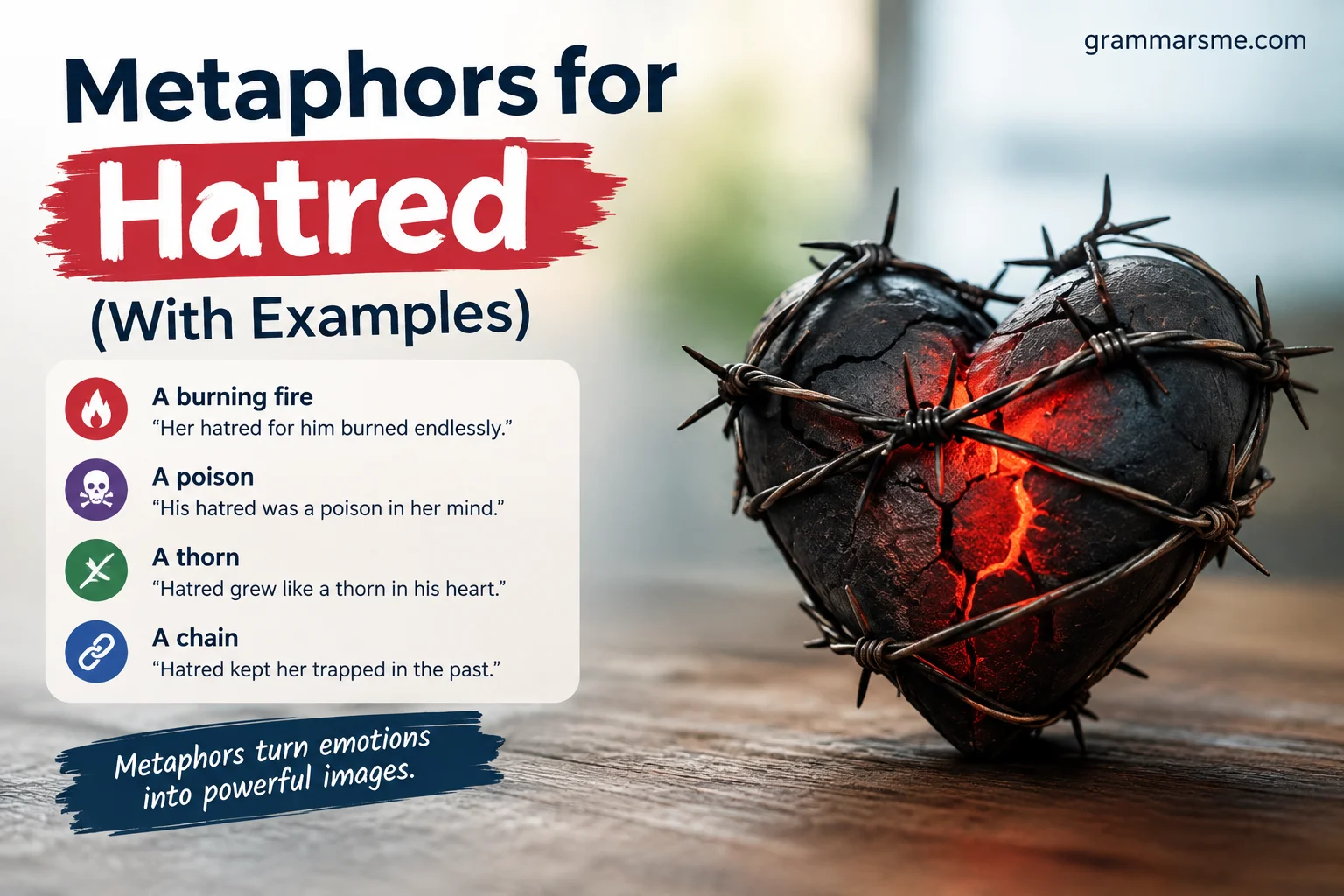

20 Metaphors for Hatred (With Examples) shows how people can use metaphors to describe an intense emotion like hatred without speaking directly.
A strong feeling such as strong dislike can be difficult to express, but creative words like consuming fire, spreading poison, and dark storm create vivid images that help readers understand its meaning and emotional weight. Writers, poets, and speakers can use these phrases in writing, speaking, and everyday communication to make hard feelings more clear, interesting, and memorable. Each metaphor offers a different perspective, helping us compare one thing with something else and understand abstract emotions in a more natural way. In my experience, this approach gives feelings a stronger expression and helps people connect with difficult ideas.
When you write a character who is experiencing hatred, physical reactions, dialogue, and emotion tells can show rather than simply tell the story, helping readers immerse themselves in the scene. These meaningful metaphors can illustrate hate through anger, resentment, bitterness, and animosity, while showing how hatred may cloud judgment, fuel conflict, and leave lasting scars. They can be useful in essays, storytelling, speeches, and poetry, where comparison, context, and communication create stronger emotional impact. Hatred may involve individuals, groups, or abstract concepts, and it can appear through a variety of behaviors, including passive-aggressive behaviors, outright aggression, and violence
1. Hatred Is a Burning Fire
Meaning: Hatred can be compared to a fire because it can grow hotter and harder to control.
Detailed explanation: A fire often begins with a small spark before spreading. In the same way, resentment can start with one painful experience and become stronger when anger is repeatedly revisited. This metaphor emphasizes the intensity and destructive potential of hatred.
Example: Her hatred was a burning fire that grew hotter every time she remembered the betrayal.
3 Other Ways to Say It:
- Hatred is a raging flame.
- Hatred is a blazing inferno.
- Hatred is a fire in the heart.
2. Hatred Is a Poison
Meaning: Hatred can be described as poison because it can slowly damage the person who carries it.
Detailed explanation: Poison doesn’t always cause immediate visible harm. Its effects can build gradually. Hatred can work similarly, affecting thoughts, relationships, and emotional well-being over time.
Example: His hatred was poison that slowly changed the way he saw everyone around him.
3 Other Ways to Say It:
- Hatred is a toxic substance.
- Hatred is emotional poison.
- Hatred is a venomous feeling.
3. Hatred Is a Dark Storm
Meaning: Hatred can resemble a storm because it brings emotional turbulence and darkness.
Detailed explanation: A storm can suddenly change a peaceful atmosphere into something frightening and chaotic. Hatred may create a similar shift inside a person’s mind, replacing calm thoughts with anger and hostility.
Example: A dark storm of hatred gathered inside him whenever he heard her name.
3 Other Ways to Say It:
- Hatred is an emotional thunderstorm.
- Hatred is a gathering cloud of anger.
- Hatred is a violent inner storm.
4. Hatred Is a Frozen Heart
Meaning: A frozen heart represents emotional coldness and the absence of warmth or compassion.
Detailed explanation: Ice is hard, cold, and resistant to change. Comparing hatred to a frozen heart suggests that painful feelings have made someone emotionally distant or unwilling to forgive.
Example: Years of resentment had turned his heart into ice.
3 Other Ways to Say It:
- Hatred is a heart covered in ice.
- Hatred is emotional frost.
- Hatred is a winter inside the heart.
5. Hatred Is a Thorn
Meaning: Hatred can be a thorn because it causes persistent emotional pain.
Detailed explanation: A thorn is small but capable of causing sharp pain whenever it is touched. Hatred can work the same way, remaining hidden beneath the surface and hurting whenever an old memory returns.
Example: Her hatred was a thorn buried beneath years of silence.
3 Other Ways to Say It:
- Hatred is a sharp wound.
- Hatred is a splinter in the heart.
- Hatred is a painful thorn.
6. Hatred Is a Heavy Chain
Meaning: Hatred can be compared to a chain because it can keep someone emotionally tied to the past.
Detailed explanation: A chain restricts movement and makes freedom difficult. Likewise, holding onto hatred can prevent someone from emotionally moving forward.
Example: His hatred became a heavy chain that kept him tied to an old betrayal.
3 Other Ways to Say It:
- Hatred is an emotional anchor.
- Hatred is a burdened chain.
- Hatred is a shackle of resentment.
7. Hatred Is a Black Cloud
Meaning: A black cloud represents a dark emotional presence that follows someone.
Detailed explanation: A dark cloud can cover sunlight and make everything appear gloomy. Hatred can similarly influence how someone interprets experiences, relationships, and memories.
Example: The hatred hanging over their relationship was like a black cloud.
3 Other Ways to Say It:
- Hatred is a shadow overhead.
- Hatred is a cloud of bitterness.
- Hatred is a dark veil.
8. Hatred Is a Wild Animal
Meaning: Hatred can be compared to a wild animal because it can become difficult to control once released.
Detailed explanation: A wild animal reacts instinctively and unpredictably. This metaphor highlights the powerful, impulsive side of hatred, especially when intense anger overrides thoughtful judgment.
Example: His hatred was a wild animal that escaped whenever his anger took control.
3 Other Ways to Say It:
- Hatred is a beast within.
- Hatred is a caged animal.
- Hatred is an untamed force.
9. Hatred Is a Rusted Blade
Meaning: A rusted blade represents an old resentment that remains capable of causing pain.
Detailed explanation: Rust suggests age and neglect, while a blade suggests harm. Together, they create a metaphor for hatred that has survived for years without being resolved.
Example: Her old hatred was a rusted blade she still carried in her memories.
3 Other Ways to Say It:
- Hatred is a dull weapon.
- Hatred is an old blade.
- Hatred is a corroded edge.
10. Hatred Is a Shadow
Meaning: Hatred can be a shadow because it can follow a person wherever they go.
Detailed explanation: A shadow stays close to its source and can be difficult to escape. This makes it an effective metaphor for hatred that remains present even when the original conflict is long gone.
Example: Her hatred followed her like a shadow long after the argument ended.
3 Other Ways to Say It:
- Hatred is a dark companion.
- Hatred is a persistent shadow.
- Hatred is a memory that follows.
11. Hatred Is a Cracked Mirror
Meaning: A cracked mirror represents hatred that can distort how someone sees another person.
Detailed explanation: A damaged mirror doesn’t provide a clear reflection. Similarly, hatred can distort perception, causing someone to focus only on another person’s flaws while ignoring their complexity.
Example: His hatred became a cracked mirror through which he saw everything she did.
3 Other Ways to Say It:
- Hatred is a distorted reflection.
- Hatred is a broken lens.
- Hatred is a warped mirror.
12. Hatred Is a Locked Room
Meaning: Hatred can feel like being trapped inside an emotional room with no easy way out.
Detailed explanation: A locked room represents isolation and confinement. When resentment becomes deeply rooted, a person may feel stuck in the same painful thoughts and memories.
Example: Her hatred became a locked room where the same painful memories played again and again.
3 Other Ways to Say It:
- Hatred is an emotional prison.
- Hatred is a sealed chamber.
- Hatred is a closed door to peace.
13. Hatred Is a Bitter Seed
Meaning: Hatred can begin as a small feeling and grow into something much larger.
Detailed explanation: A seed needs time and suitable conditions to grow. Similarly, resentment can become hatred when anger, disappointment, and painful memories are repeatedly nurtured.
Example: That single betrayal planted a bitter seed that eventually grew into hatred.
3 Other Ways to Say It:
- Hatred is a seed of bitterness.
- Hatred is a root of resentment.
- Hatred is a growing thornbush.
14. Hatred Is a Burning Coal
Meaning: A burning coal represents hatred that remains hot beneath an apparently calm surface.
Detailed explanation: A coal may look quiet while retaining intense heat. This metaphor works well when someone hides their resentment instead of openly expressing it.
Example: Beneath his calm expression, hatred glowed like a burning coal.
3 Other Ways to Say It:
- Hatred is a hidden ember.
- Hatred is a smoldering coal.
- Hatred is a buried spark.
Read More: 20 Metaphors for Hunger (With Examples)
15. Hatred Is a Wall
Meaning: Hatred can become a wall that separates people emotionally.
Detailed explanation: A wall prevents people from reaching one another. When hatred replaces communication and understanding, it can create emotional distance that becomes increasingly difficult to overcome.
Example: Years of hatred built a wall between the two brothers.
3 Other Ways to Say It:
- Hatred is an emotional barrier.
- Hatred is a wall of resentment.
- Hatred is a divide between hearts.
16. Hatred Is a Deep Wound
Meaning: Hatred can represent an emotional wound that has never properly healed.
Detailed explanation: Some emotional experiences leave lasting pain. When that pain isn’t addressed, resentment can grow around it. This metaphor focuses more on the hurt behind hatred than on anger itself.
Example: Her hatred was really a deep wound hidden beneath years of silence.
3 Other Ways to Say It:
- Hatred is an unhealed wound.
- Hatred is buried pain.
- Hatred is a scar that still aches.
17. Hatred Is a Poisoned Well
Meaning: A poisoned well represents a source of emotion that contaminates everything around it.
Detailed explanation: A well normally provides something valuable, but contamination makes its contents harmful. Likewise, deep hatred can influence relationships, memories, and decisions, turning ordinary experiences negative.
Example: His hatred had become a poisoned well, coloring every memory of their friendship.
3 Other Ways to Say It:
- Hatred is a contaminated spring.
- Hatred is a toxic source.
- Hatred is a bitter well.
18. Hatred Is a Volcano
Meaning: Hatred can resemble a volcano because intense emotions may remain hidden before suddenly erupting.
Detailed explanation: A volcano can appear quiet while pressure builds underneath. Hatred may work similarly when someone suppresses resentment until a small event triggers an emotional explosion.
Example: Years of resentment turned his heart into a volcano ready to erupt.
3 Other Ways to Say It:
- Hatred is a pressure cooker.
- Hatred is a sleeping volcano.
- Hatred is anger beneath the surface.
19. Hatred Is a Maze
Meaning: Hatred can be a maze because it can trap people in complicated thoughts and emotions.
Detailed explanation: A maze has many turns, dead ends, and confusing paths. Hatred can create a similar mental pattern, where a person repeatedly returns to the same memories without finding emotional resolution.
Example: He wandered through a maze of hatred, unable to find a path back to peace.
3 Other Ways to Say It:
- Hatred is an emotional labyrinth.
- Hatred is a tangled path.
- Hatred is a maze of resentment.
20. Hatred Is a Poisoned Arrow
Meaning: A poisoned arrow represents hatred that carries both emotional pain and the desire to cause further harm.
Detailed explanation: An arrow moves toward its target, while poison makes its effect more dangerous. This metaphor can describe hatred that remains focused on another person and continues causing emotional damage long after the original conflict.
Example: His hatred was a poisoned arrow aimed at anyone who reminded him of the past.
3 Other Ways to Say It:
- Hatred is a venomous arrow.
- Hatred is a weapon of resentment.
- Hatred is a barbed accusation.
MCQs:
1. Which metaphor describes hatred as something that can spread and become intense?
A. Hatred is a locked room
B. Hatred is a burning fire
C. Hatred is a cracked mirror
D. Hatred is a maze
2. Which metaphor suggests that hatred can slowly cause emotional damage?
A. Poison
B. Wall
C. Shadow
D. Volcano
3. “Hatred is a dark storm” mainly emphasizes:
A. Happiness
B. Emotional turbulence
C. Physical strength
D. Friendship
4. Which metaphor represents emotional coldness?
A. Burning coal
B. Frozen heart
C. Poisoned well
D. Wild animal
5. A thorn is used as a metaphor for hatred because it represents:
A. Celebration
B. Persistent pain
C. Success
D. Peace
6. Which metaphor suggests that hatred can keep someone trapped in the past?
A. Heavy chain
B. Burning fire
C. Dark storm
D. Bitter seed
7. “Hatred is a black cloud” suggests:
A. Emotional darkness
B. Physical illness
C. Romantic excitement
D. Financial success
8. Which metaphor describes hatred as difficult to control?
A. Wild animal
B. Cracked mirror
C. Deep wound
D. Locked room
9. Which metaphor suggests that old hatred can remain painful?
A. Rusted blade
B. Black cloud
C. Bitter seed
D. Wall
10. What does “Hatred is a shadow” suggest?
A. Hatred disappears immediately
B. Hatred follows a person
C. Hatred creates happiness
D. Hatred represents wisdom
11. Which metaphor suggests that hatred can distort someone’s perception?
A. Volcano
B. Cracked mirror
C. Heavy chain
D. Thorn
12. “Hatred is a bitter seed” suggests that hatred:
A. Can grow from something small
B. Always disappears quickly
C. Creates physical strength
D. Represents kindness
13. Which metaphor best represents suppressed hatred?
A. Burning coal
B. Open door
C. Clear water
D. Bright sky
14. “Hatred is a volcano” suggests that:
A. Hatred is always peaceful
B. Hidden pressure can eventually erupt
C. Hatred is impossible to feel
D. Hatred improves communication
15. Which metaphor represents hatred as an emotional barrier between people?
A. Poison
B. Wall
C. Seed
D. Storm
Answer Key:
1-B, 2-A, 3-B, 4-B, 5-B, 6-A, 7-A, 8-A, 9-A, 10-B, 11-B, 12-A, 13-A, 14-B, 15-B
FAQs:
1. What is a metaphor for hatred?
A metaphor for hatred compares the emotion to something else without using “like” or “as.” For example, “Hatred is a burning fire” presents hatred as something capable of spreading and causing destruction.
2. What is a powerful metaphor for deep hatred?
“Hatred is a poisoned well” is a powerful metaphor for deep hatred because it suggests that the emotion has become a harmful source that can affect everything around it.
3. What is a metaphor for hidden hatred?
“Hatred is a burning coal” works well for hidden hatred because a coal can appear quiet while still holding intense heat underneath.
4. How can metaphors make hatred easier to express?
Metaphors turn an abstract emotion into a clear image. Instead of simply saying someone feels intense hatred, you can describe it as a volcano, storm, shadow, or poison, giving readers a stronger sense of the emotion.
5. Can metaphors for hatred be used in creative writing?
Yes. These metaphors can work especially well in poetry, fiction, personal essays, speeches, journaling, and reflective writing. Choose imagery that matches the character’s emotions and the situation.
Conclusion:
Metaphors for hatred allow writers and speakers to describe an intense emotion without relying on the same basic words repeatedly. A burning fire can emphasize intensity, a shadow can suggest persistence, a frozen heart can express emotional coldness, and a deep wound can reveal the pain underneath resentment. The best metaphor depends on what you want the reader to feel or understand. By choosing imagery carefully, you can communicate anger, resentment, bitterness, emotional distance, and unresolved pain in a more vivid and thoughtful way.




1 thought on “20 Metaphors for Hatred (With Examples)”