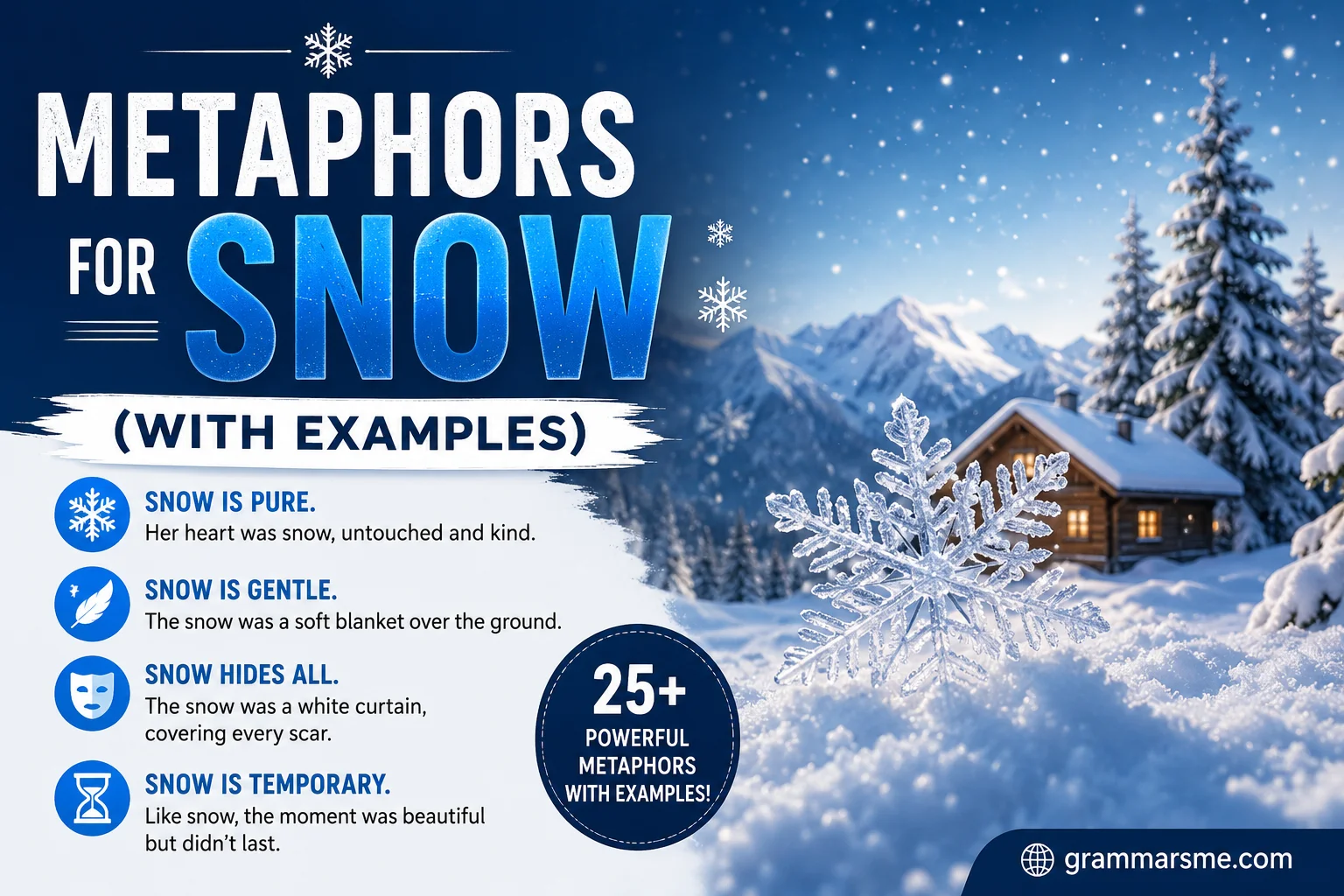

In 20 Metaphors for Snow (With Examples), cold weather becomes more interesting through metaphors that create vivid winter images.
Instead of repeating the word cold, a metaphor for cold can describe a cold feeling, a cold person, or the air as a frozen knife, giving the reader’s mind a stronger picture. For English learners, these expressions can improve writing and speaking in essays, stories, poems, social media captions, and everyday conversations. Similes and a simile compare things with like or as, while metaphors create a direct image. This 2026 guide helps you learn and use 50 easy metaphors for cold, with simple meanings, example sentences, alternative expressions, conversations, quizzes, and practical tips that build confidence in easy English.
1. Snow Is a White Blanket
Meaning: Snow is compared to a soft white blanket covering the ground.
Detailed Explanation: This metaphor emphasizes how snow spreads across landscapes and makes everything appear covered, protected, and peaceful. It creates a cozy image, almost as if nature has been tucked into bed. This metaphor works especially well when describing a quiet winter morning.
Example:
“The snow was a white blanket, covering the fields before sunrise.”
Three Other Ways to Say It:
- Snow is a blanket of white.
- Snow is a soft cover over the earth.
- Snow is nature’s winter quilt.
2. Snow Is a White Carpet
Meaning: Snow is described as a carpet laid across the ground.
Detailed Explanation: A carpet normally covers a floor, so comparing snow to one shows how evenly it spreads over roads, gardens, sidewalks, and fields. It can also suggest that the landscape has been transformed into a clean, elegant surface.
Example:
“A white carpet of snow stretched from the garden to the distant hills.”
Three Other Ways to Say It:
- Snow is a carpet of frost.
- Snow creates a white floor across the earth.
- Snow is nature’s winter carpet.
3. Snow Is a Silent Messenger
Meaning: Snow is portrayed as a messenger that arrives without making a sound.
Detailed Explanation: Snow often falls quietly and changes the appearance of everything around it. Calling it a silent messenger gives snow a mysterious quality, as though winter itself has arrived to announce a new season.
Example:
“During the night, snow arrived as a silent messenger, announcing the beginning of winter.”
Three Other Ways to Say It:
- Snow is a quiet herald of winter.
- Snow is winter’s gentle announcement.
- Snow is a wordless visitor.
4. Snow Is Nature’s Lace
Meaning: Snow is compared to delicate lace created by nature.
Detailed Explanation: Fresh snow can form intricate patterns on branches, fences, windows, and rooftops. This metaphor focuses on its delicate beauty and detailed appearance. It is especially useful in poetic or descriptive writing.
Example:
“Snow covered the branches like nature’s delicate lace.”
Three Other Ways to Say It:
- Snow is winter’s lacework.
- Snow is delicate white embroidery.
- Snow is nature’s frozen decoration.
5. Snow Is a Sleeping Spell
Meaning: Snow is described as a magical spell that makes the world feel still and quiet.
Detailed Explanation: Heavy snowfall can slow traffic, quiet streets, and make familiar places look completely different. This metaphor captures the almost magical stillness that follows a snowfall.
Example:
“The falling snow cast a sleeping spell over the village.”
Three Other Ways to Say It:
- Snow is a winter enchantment.
- Snow is a spell of stillness.
- Snow is winter’s magic dust.
6. Snow Is a Blank Canvas
Meaning: Snow is compared to a blank canvas waiting for marks and memories.
Detailed Explanation: Fresh snow has an untouched surface where footprints, tire tracks, animal trails, and other patterns can appear. The metaphor suggests new beginnings, possibilities, and creativity.
Example:
“The fresh snow was a blank canvas, waiting for the first footprints.”
Three Other Ways to Say It:
- Snow is a fresh page.
- Snow is an untouched canvas.
- Snow is nature’s clean slate.
7. Snow Is Winter’s Pillow
Meaning: Snow is portrayed as a soft pillow resting over the landscape.
Detailed Explanation: This metaphor highlights the softness and quietness associated with fresh snowfall. It can make a winter scene feel comfortable and gentle rather than harsh or cold.
Example:
“The hills rested beneath winter’s pillow of freshly fallen snow.”
Three Other Ways to Say It:
- Snow is a soft winter cushion.
- Snow is a pillow for the earth.
- Snow is winter’s gentle padding.
8. Snow Is a Frozen Ocean
Meaning: Snow is compared to a vast frozen ocean stretching across the landscape.
Detailed Explanation: Large fields covered in snow can look endless, especially from a distance. This metaphor emphasizes vastness, depth, and an almost otherworldly appearance.
Example:
“Beyond the cabin, the snow looked like a frozen ocean beneath the gray sky.”
Three Other Ways to Say It:
- Snow is a white sea.
- Snow is an endless winter ocean.
- Snow is a frozen white horizon.
9. Snow Is Winter’s Whisper
Meaning: Snow is described as a soft whisper from winter.
Detailed Explanation: Snowfall is often quiet, gentle, and subtle. This metaphor gives snow a human quality and suggests that winter communicates through silence rather than loud sounds.
Example:
“Each snowflake felt like winter’s whisper against the window.”
Three Other Ways to Say It:
- Snow is winter speaking softly.
- Snow is a quiet winter voice.
- Snow is a whisper from the cold season.
10. Snow Is a Cloud That Fell to Earth
Meaning: Snow is imagined as a piece of the clouds that has descended to the ground.
Detailed Explanation: Snowflakes form in clouds, so this metaphor creates a beautiful connection between the sky and earth. It is particularly effective when describing snow falling through the air.
Example:
“It seemed as though clouds had fallen to earth, covering the town in white.”
Three Other Ways to Say It:
- Snow is the sky’s fallen softness.
- Snow is a piece of heaven on the ground.
- Snow is a cloud transformed into white dust.
11. Snow Is Winter’s Jewelry
Meaning: Snow is compared to jewelry decorating the natural world.
Detailed Explanation: Snow and ice can sparkle in sunlight, decorate tree branches, and make ordinary surroundings appear elegant. This metaphor emphasizes beauty, brightness, and decoration.
Example:
“Sunlight turned the snow-covered branches into winter’s jewelry.”
Three Other Ways to Say It:
- Snow is nature’s winter diamonds.
- Snow is frosted decoration.
- Snow is winter’s sparkling treasure.
12. Snow Is a White Symphony
Meaning: Snow is portrayed as a symphony created through visual beauty and quietness.
Detailed Explanation: A symphony usually involves sound, but this metaphor deliberately turns the silent landscape into something artistic. It suggests that falling snow, pale skies, and peaceful surroundings work together like different parts of a beautiful composition.
Example:
“The falling flakes created a white symphony across the silent town.”
Three Other Ways to Say It:
- Snow is a silent winter song.
- Snow is nature’s quiet composition.
- Snow is a symphony of white.
13. Snow Is a Veil
Meaning: Snow is compared to a white veil hiding or softening the landscape.
Detailed Explanation: During snowfall, distant objects can become blurred or partially hidden. The metaphor gives the scene a sense of mystery, softness, and transformation.
Example:
“A veil of snow covered the mountains and softened their sharp edges.”
Three Other Ways to Say It:
- Snow is a white curtain.
- Snow is a winter shroud.
- Snow is a soft veil over nature.
14. Snow Is Nature’s Eraser
Meaning: Snow is described as an eraser that removes the visual marks of the old landscape.
Detailed Explanation: Fresh snow can cover footprints, dirt, grass, rocks, and other imperfections. This metaphor can symbolize renewal, forgiveness, and a fresh beginning.
Example:
“Overnight, snow became nature’s eraser, hiding yesterday’s muddy paths.”
Three Other Ways to Say It:
- Snow is winter’s reset button.
- Snow is nature’s clean slate.
- Snow is a blanket that hides yesterday.
Read More: Metaphors for Soccer (With Examples)
15. Snow Is a Thousand White Feathers
Meaning: Individual snowflakes are compared to tiny white feathers floating from the sky.
Detailed Explanation: Snowflakes can drift gently through the air, creating a light and graceful movement. This metaphor highlights the softness, delicacy, and floating motion of snowfall.
Example:
“A thousand white feathers drifted from the evening sky.”
Three Other Ways to Say It:
- Snowflakes are tiny white feathers.
- Snow is a shower of soft feathers.
- Snowflakes are floating pieces of white silk.
16. Snow Is a Winter Garden
Meaning: A snow-covered landscape is compared to a garden transformed by winter.
Detailed Explanation: Snow can decorate trees, fences, rooftops, and plants in unexpected ways. Instead of focusing on flowers and greenery, this metaphor presents winter itself as a kind of garden filled with white shapes and natural beauty.
Example:
“The backyard became a winter garden, with every branch dressed in snow.”
Three Other Ways to Say It:
- Snow creates a garden of white.
- The landscape becomes a frozen garden.
- Winter turns nature into a snowy paradise.
17. Snow Is a Time Machine
Meaning: Snow is described as a time machine that can bring back childhood memories.
Detailed Explanation: Snow often reminds people of snowball fights, sledding, school closures, family gatherings, or quiet winter evenings. This metaphor focuses on the emotional connection between snow and nostalgia.
Example:
“The first snowfall was a time machine, taking me back to carefree childhood winters.”
Three Other Ways to Say It:
- Snow is a bridge to childhood.
- Snow is a doorway to old memories.
- Snow is winter’s memory keeper.
18. Snow Is a Blanket of Silence
Meaning: Snow is portrayed as a blanket that covers the world with silence.
Detailed Explanation: A fresh layer of snow can make familiar places feel remarkably quiet. The metaphor combines the physical image of a blanket with the emotional feeling of peace and stillness.
Example:
“A blanket of silence settled over the neighborhood as the snow continued to fall.”
Three Other Ways to Say It:
- Snow is a cover of quietness.
- Snow is silence made visible.
- Snow is a quiet blanket over the world.
19. Snow Is Winter’s Paintbrush
Meaning: Snow is compared to a paintbrush that transforms the landscape into a new picture.
Detailed Explanation: Snow changes the colors, shapes, and atmosphere of familiar surroundings. This metaphor emphasizes the creative power of winter and shows how snowfall can make an ordinary scene appear completely different.
Example:
“Winter used snow as a paintbrush, turning the dark hills bright and white.”
Three Other Ways to Say It:
- Snow is winter’s brushstroke.
- Snow is nature’s white paint.
- Snow is a brush that redraws the landscape.
20. Snow Is a Gift from the Sky
Meaning: Snow is described as a beautiful gift delivered from the sky.
Detailed Explanation: This metaphor gives snowfall a feeling of wonder and gratitude. It works particularly well when describing the excitement of seeing the first snow or sharing a beautiful winter moment with someone.
Example:
“The children ran outside to welcome the gift from the sky.”
Three Other Ways to Say It:
- Snow is a present from winter.
- Snow is the sky’s white gift.
- Snow is a winter blessing from above.
MCQs:
1. The fresh snow covered the field like ________.
A) a noisy drum
B) a white blanket
C) a burning flame
D) a dark shadow
2. The snowfall reminded Maria of her childhood, acting like ________.
A) a time machine
B) a thunderstorm
C) a clock tower
D) a broken mirror
3. Snow falling gently from the sky was compared to ________.
A) heavy stones
B) golden coins
C) white feathers
D) falling leaves
4. Snow covered the landscape so completely that it seemed like ________.
A) nature’s eraser
B) a loud bell
C) a summer flower
D) a bright candle
5. The snow-covered branches looked like ________.
A) winter’s jewelry
B) autumn’s fire
C) summer’s grass
D) spring’s rain
6. The untouched snowy field looked like ________.
A) a crowded room
B) a blank canvas
C) a noisy street
D) a dark tunnel
7. The quiet snowfall was described as ________.
A) winter’s whisper
B) summer’s shout
C) autumn’s thunder
D) spring’s alarm
8. The snow changed the landscape as though winter were using ________.
A) a hammer
B) a paintbrush
C) a shovel
D) a ruler
9. Snow covering the mountains like a soft covering can be described as ________.
A) a white veil
B) a red curtain
C) a golden flame
D) a black wall
10. A vast snowy field resembling an endless body of white can be called ________.
A) a frozen ocean
B) a green forest
C) a summer garden
D) a stone road
11. Snow that makes the world peaceful and quiet can be called ________.
A) a blanket of silence
B) a storm of noise
C) a river of sound
D) a mountain of music
12. Snow that makes a landscape look delicate and decorated can be called ________.
A) nature’s lace
B) winter’s hammer
C) summer’s rope
D) autumn’s stone
13. A snow-covered backyard filled with beautiful white branches can be described as ________.
A) a winter garden
B) a summer desert
C) a rainy forest
D) a burning field
14. Snow that transforms the world into something artistic can be described as ________.
A) winter’s paintbrush
B) winter’s clock
C) winter’s engine
D) winter’s bell
15. Snow that feels like a wonderful arrival from above can be called ________.
A) a gift from the sky
B) a shadow from the ground
C) a stone from the mountain
D) a leaf from the tree
Answer Key:
1-B, 2-A, 3-C, 4-A, 5-A, 6-B, 7-A, 8-B, 9-A, 10-A, 11-A, 12-A, 13-A, 14-A, 15-A
FAQs:
What is a good metaphor for snow?
A strong metaphor for snow is “snow is a white blanket.” It suggests that snow gently covers the earth and creates a peaceful winter scene. Other choices include “snow is a blank canvas,” “snow is nature’s lace,” and “snow is winter’s whisper.”
What can snow symbolize in writing?
Snow can symbolize purity, peace, silence, loneliness, renewal, transformation, nostalgia, or new beginnings. The meaning depends on the context and the emotions surrounding the scene.
What is a metaphor for falling snow?
A poetic metaphor for falling snow is “a thousand white feathers.” It compares drifting snowflakes to soft feathers floating gently from the sky.
How do I use snow metaphors in creative writing?
Choose a metaphor that matches the mood of your scene. Use comforting metaphors for peaceful moments, such as “winter’s pillow,” and more mysterious imagery, such as “a white veil,” for suspenseful scenes.
Why are snow metaphors useful?
Snow metaphors make descriptions more vivid and memorable. Instead of simply saying that snow covered the ground, you can say it was “a white carpet” or “nature’s clean slate,” giving readers a stronger visual and emotional impression.
Conclusion:
The right metaphor can turn an ordinary description of snow into something visual, emotional, and memorable. Whether you see snow as a white blanket, a blank canvas, winter’s whisper, nature’s lace, or a gift from the sky, each comparison creates a different feeling. Use these 20 metaphors for snow according to the mood, audience, and message you want to communicate. A thoughtful metaphor doesn’t merely describe snow—it helps your reader see it, feel it, and remember it.


1 thought on “20 Metaphors for Snow (With Examples)”